

The chairs that changed how we sit · No. 1
Humanscale Freedom: The Chair That Got Rid of the Knobs
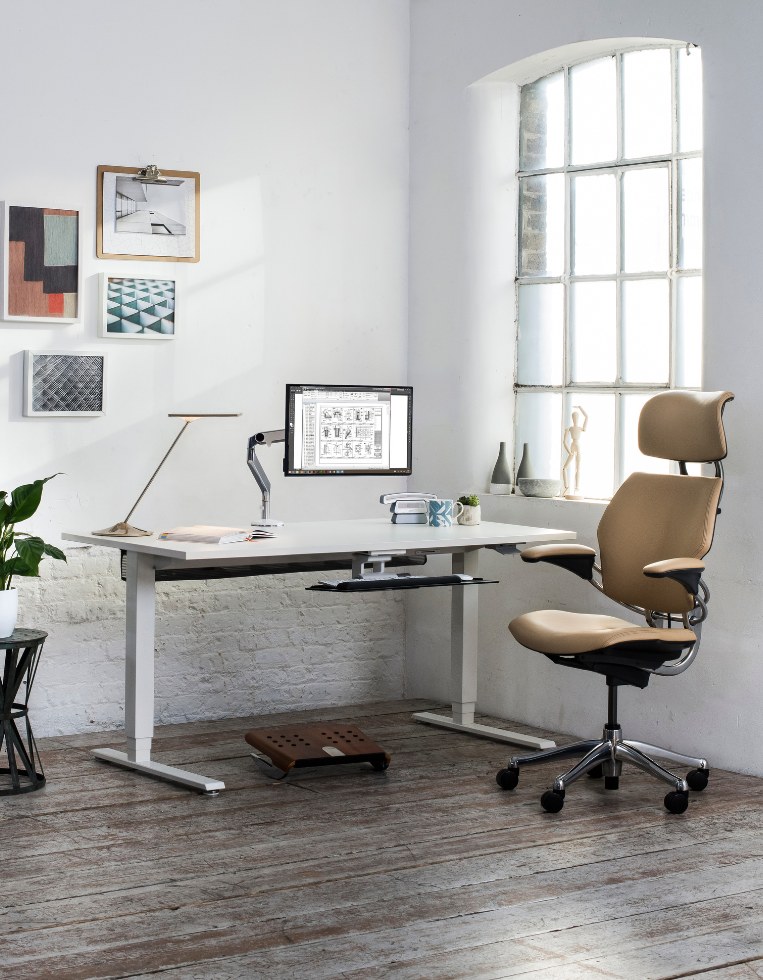
What made the Humanscale Freedom chair a turning point? It adjusted itself. Designed by Niels Diffrient and launched in 1999, Freedom replaced the knobs and levers of the standard task chair with a recline that responds to the sitter’s own body weight. Humanscale calls it the first self-adjusting chair, and it changed what people expect from ergonomic office furniture.
That makes it the right place to start our new series, The chairs that changed how we sit. Each episode looks at one design, the idea behind it and why it still matters in the offices we plan today.
What Problem Was Freedom Designed to Solve?
By the late 1990s, a good office chair meant a complicated one. Tension dials, recline locks and levers promised a perfect fit, but every control was a decision the sitter had to get right. Set the chair for one person and it was wrong for the next.
Diffrient saw it as a health problem, not a mechanical one. People need to move while they work, so his chair would remove whatever got in the way of moving. The goal was a chair that does the adjusting, so you don’t have to.
How Does a Weight-Sensitive Recline Work?
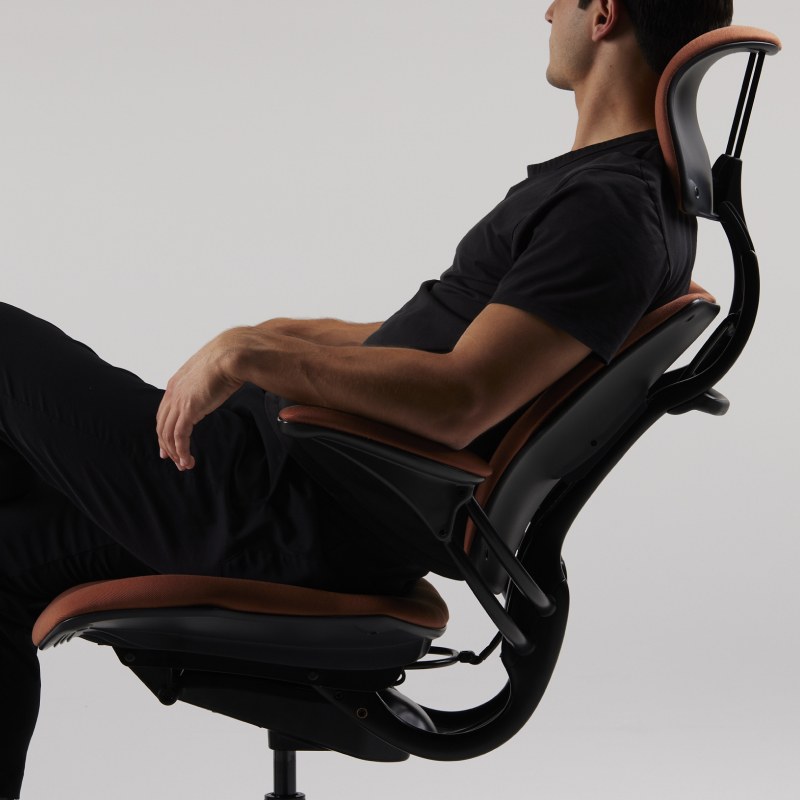
A weight-sensitive recline uses your own body weight, instead of a spring you tighten, to set how much the chair resists as you lean back. Lighter and heavier sitters get matching support without touching a dial. Freedom’s recline also holds you wherever you stop leaning, then follows you when you sit up again.
Two more details complete the idea:
- Synchronous armrests attach to the backrest, so they move with you as you recline. Both arms adjust in height together, with one hand.
- A dynamic headrest, on the headrest model, cradles your head and neck when you lean back and stays neutral when you sit upright.
There’s no tension knob to find and no recline lock to remember.
Who Was Niels Diffrient?
Niels Diffrient (1928 to 2013) was an American industrial designer and a pioneer of ergonomics. He trained at Cranbrook Academy of Art and spent 25 years at Henry Dreyfuss Associates, where he led work on the Princess telephone, the Polaroid SX-70 camera and John Deere’s tractor seats.
From 1974 he co-authored Humanscale, a set of reference books that gave designers the measurements of real human bodies across a wide range of sizes. The company that later built his chairs shares the name. Diffrient won the National Design Award for product design in 2002 and held nearly 60 patents.
Why Does Freedom Still Matter for Office Design?
Because offices have caught up with it. In a hybrid workplace, one desk can host several people in a week. A chair that needs a setup routine depends on every one of them doing it. A self-adjusting recline simply fits whoever sits down.
The idea has also stood the test of time. By Freedom’s 20th anniversary in 2019, Humanscale reported more than 2 million chairs sold and 10 international awards, and other major manufacturers had launched self-adjusting chairs of their own.
For office design, the lesson reaches beyond one chair: the best ergonomic office furniture asks less of the people who use it.
Where Can You Try Freedom in Sofia?
Freedom has been part of Studio Novo from the start. Humanscale was in our very first showroom, back in 2009 and 2010. A few years later, Cisco Systems became our first big corporate client, a vote of confidence in the Freedom chairs we had brought to Sofia.
Today you can sit in Freedom at our showroom in XS Tower, 5 Panorama Sofia Street, Monday to Friday, 9 AM to 6 PM. Planning a new office or refitting a team? We’ll show you where it fits in complete office solutions, from task seating to desks, acoustics and layout.
See the Humanscale range or book a consultation.
Frequently Asked Questions
1. Who designed the Humanscale Freedom chair?
Industrial designer Niels Diffrient designed the Freedom chair, and Humanscale launched it in 1999. Diffrient spent 25 years at Henry Dreyfuss Associates and co-authored the Humanscale reference books on human body measurements. Freedom was his answer to task chairs full of knobs and levers: a chair that adjusts its recline to the sitter’s weight automatically.
2. What is a weight-sensitive recline?
A weight-sensitive recline uses the sitter’s own body weight to set how much the chair resists as they lean back, instead of a tension knob set by hand. Lighter and heavier people get matching support without adjusting anything. On the Freedom chair, the recline also holds its position wherever the sitter stops leaning.
3. Is the Freedom chair a good choice for shared desks?
Yes. Because the recline adjusts itself to each person’s weight, the chair supports whoever sits down without a setup routine, which suits hybrid offices and shared desks. People still set seat height and armrest height for their desk, and both take seconds. That makes proper support the default for every employee, not a setting someone has to find.
4. Where can I try the Freedom chair in Sofia?
You can try the Humanscale Freedom chair at the Studio Novo showroom at XS Tower, 5 Panorama Sofia Street, Sofia. We’re open Monday to Friday, 9 AM to 6 PM, and walk-ins are welcome. For a team or a new office, book a consultation and we’ll plan seating as part of a complete workspace.
Ready to Design a Space Where You Will Truly Thrive?
Explore our curated collection of ergonomic office furniture, from premium sit-stand desks and active seating to full workspace consultations tailored to your team’s needs.
Studio Novo provides ergonomic seating solutions across Bulgaria, supporting professionals in Sofia, Plovdiv, Varna, and beyond.
We combine scientifically informed ergonomic design with curated premium brands and expert consultation.
📞 Contact: +359 882 282 663
🏢 Showroom: 5 Panorama Sofia Street XS Tower, Ground Floor, Sofia 1766
🌐 Online: workwares.snolw.com
Special Offer: Schedule a consultation this month and receive a complimentary ergonomic assessment (€150 value).
Stories
The Brain Behind Beauty
A Design Truths Essay on Design Thinking and Workplace Design…

Beyond Back Pain: How Workplace Ergonomics Protects Your Mind and Your Team
It’s 3 PM. Your shoulders are creeping toward your ears, a dull throb settles at the base of your neck, and no amount of coffee seems to…
The Perception of Design: Where Form Meets Thought
Few people have shaped the way the world looks more than Paul Rand. For over fifty years…